
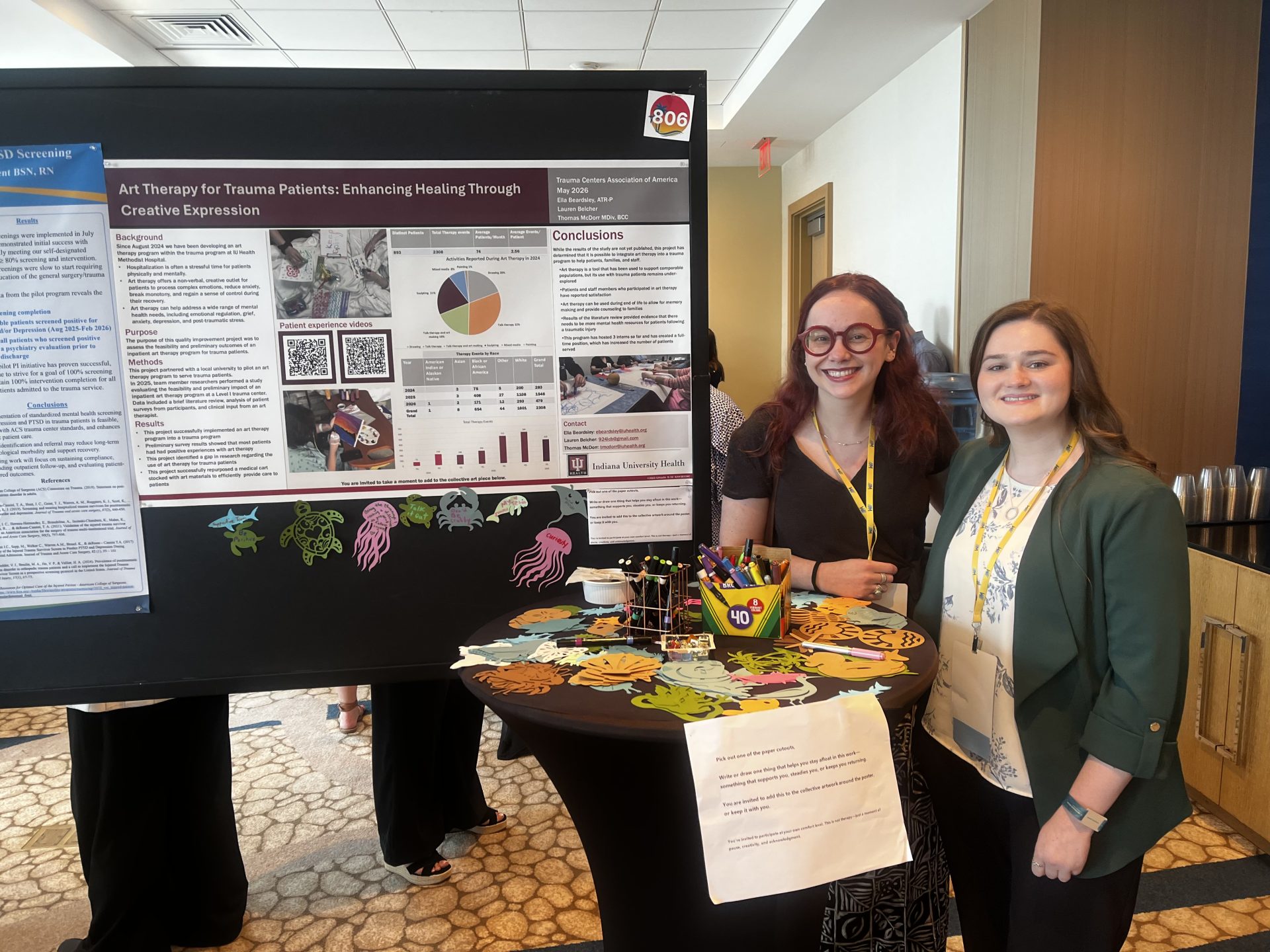
In the halls of the Methodist Hospital Trauma Center, a cart filled with acrylic paints, colored pencils, and modeling clay rolls from room to room. As Lauren Belcher ’26 (MA in Mental Health Counseling: Art Therapy) wheels the cart to the next hospital bed, she leaves her personal bias at the door and lets the patient lead the way. “I want to come in as much of a blank slate as possible,” she said.
Working with patients recovering from severe trauma, including gunshot wounds, vehicle accidents, falls, and self-inflicted injuries, Belcher serves as a bright spot during a demanding recovery process. “People are coming into the room 24/7, poking them, giving them meds,” she said. “They’re really quick interactions. I’m able to be in the room with them for hours, as long as they need me there.”
Art Therapy is the perfect fusion of Belcher’s greatest passions: art and helping others. Coming from a family of artists, she holds a deep appreciation for personal expression, which shapes her work as a therapist. In each session, the canvas belongs to the patient, the brush is in their hand, and the creative process becomes an opportunity to regain control. “When you’re in the hospital, there is so much choice taken away from the patient,” she said. “Doing art therapy brings back some of the autonomy in their life.”
Belcher’s experience with trauma is not only professional, but also deeply personal. At just 5 years old, Belcher experienced the kind of trauma she would later help others overcome.
During what seemed like an ordinary day at the water park, Belcher got distracted standing next to a water slide. A child who flew down the slide accidentally kicked her in the stomach, knocking her unconscious and into the water. Unnoticed by the lifeguards on site, a 12-year-old girl pulled Belcher out of the water. “My heart wasn’t beating,” she said. “I wasn’t breathing. I was clinically dead.”
Belcher was resuscitated and spent several days in the hospital. In the aftermath, she dealt with memory issues, leaving her family worried about her long-term cognitive recovery. “I couldn’t tell you the difference between a zebra and a giraffe,” she said.
Later, at the age of 10, she was diagnosed with Kienböck’s disease, a rare condition where a small bone in the wrist loses blood flow. Because of the condition, she struggled with movements like a normal push-up and adapted by finding new ways to use her left hand.
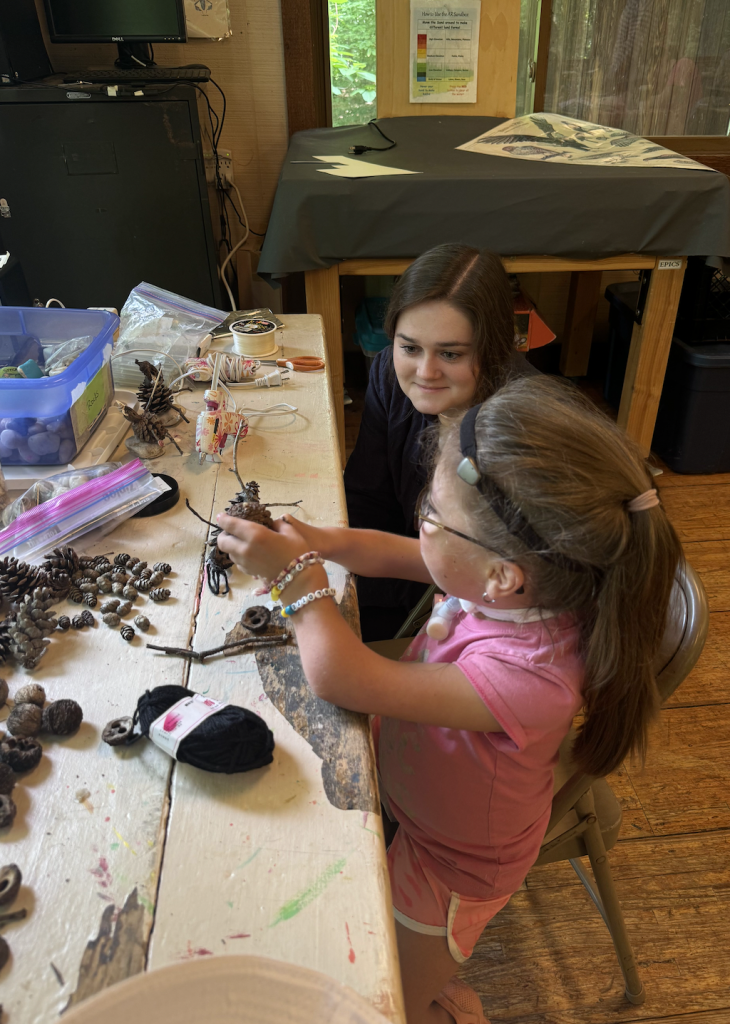
Despite her health challenges, Belcher remained motivated thanks to her support system, including her friends and family. “I don’t know where I’d be without them,” she added. The animal lover also cherishes time spent with her four-legged friends, including cats, dogs, and her turtle, appropriately named “Turtle.” They act as the dose of sunshine in her day, as she hopes to be for her patients today.
Navigating her own medical challenges ultimately inspired her to help others facing similar struggles, using art as a therapeutic tool. For adults who are familiar with mental health services, art serves as an additional language for processing emotions. With younger patients, the approach is often simpler: “We are going to do art to help your brain feel better so that your body can feel better.”
Belcher believes the best therapists are empathetic and very open to the person in the room. “Obviously, we’ve received a lot of education, but they are the experts on themselves,” she said.
She immediately fell in love with UIndy’s art therapy program, which provided her with the essential tools she needed before ever seeing a patient. “It would be hard to come out of it without having a compassionate mindset because those skills are modeled so well by the faculty,” she said.
As the first student from the program to intern in Methodist’s trauma center, Belcher brought UIndy’s multicultural mindset to her work. She commonly worked with non-English speaking patients, incorporating elements of their culture into the art-making process and helping them feel seen. She even spent time with a long-term patient with speech aphasia, which affects a person’s ability to speak, understand, read, and write. Belcher eventually built enough trust to hold a conversation with him.
In another case, she worked with a mother recovering from a severe dog attack whose young daughter was hesitant to interact with her because of the severity of the injuries. Belcher used art-making activities to help bridge that gap, giving the mother and daughter a meaningful way to reconnect.
As her patients express themselves creatively, Belcher keeps the focus on the process instead of the final product. “Whether it’s getting something off their chest that’s therapeutic, or the art-making itself, just seeing how their demeanor has improved, that’s the most rewarding thing,” said Belcher.
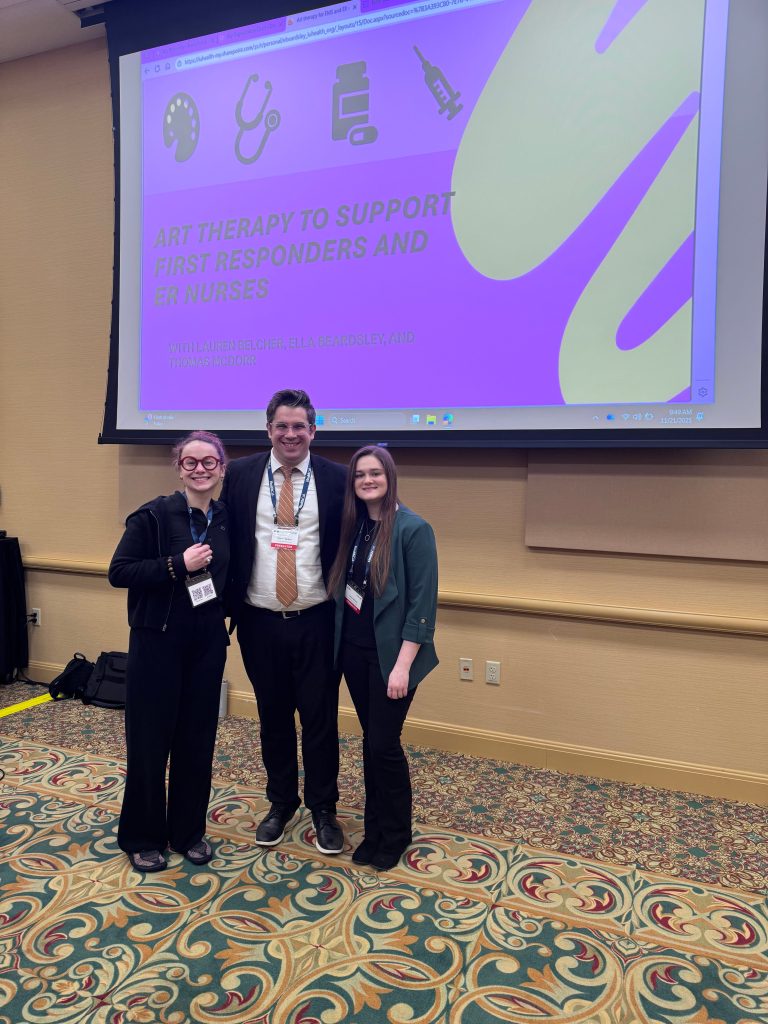
Belcher understands the uncertainty her patients face daily. Once, she struggled with memory loss so severe that she couldn’t distinguish a zebra from a giraffe, along with a wrist condition that made basic movements difficult. Yet those challenges didn’t stop her from becoming her high school’s valedictorian, earning a full-ride scholarship in undergrad, and graduating this summer from UIndy with a master’s degree.
Oftentimes, patients are overwhelmed by the constant stream of testing and procedures. When Belcher arrives with the art cart, the mood in the room often shifts. Art therapy is an opportunity for them to heal differently, by expressing themselves and making their own choices.
To see Lauren’s art website, click here.