
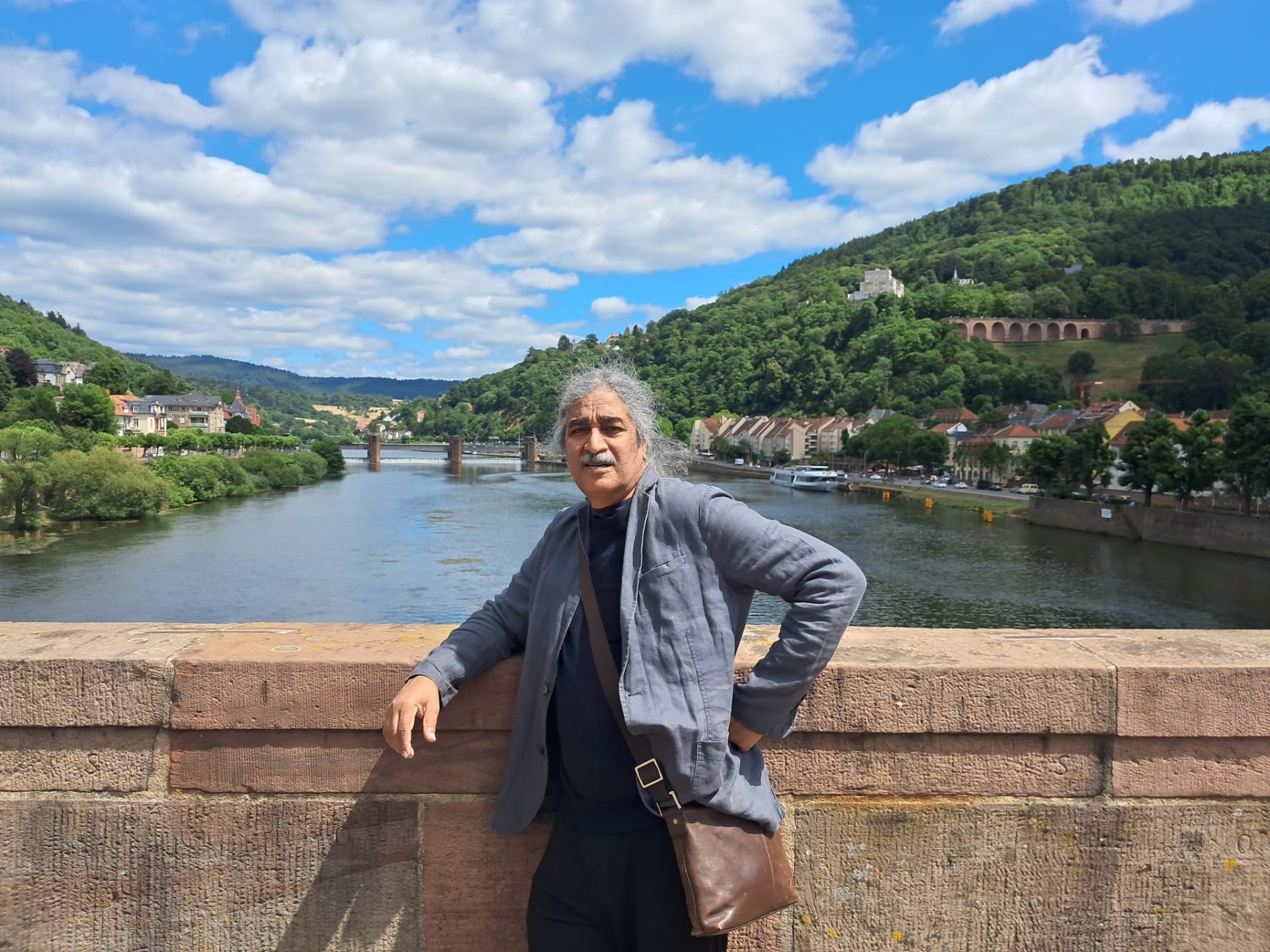
When Dr. Ashwani Kumar leads a poetry workshop at UIndy, he is taken back to early teenage memories of reading his poems aloud to his father. His father was intrigued and delighted by the newfound passion, but a small part of him worried if it was a viable career path.
Kumar hails from Bihar, a state in eastern India, where English was rarely spoken, let alone written. Having written hundreds of poems in English for major publishers, journals and magazines, he is now considered a miracle back home
He described Bihar as historically underdeveloped and sometimes violent. Kumar, whose dissertation focused on militias and violence, even offers his opinion on conflicts, politics, and culture in television appearances and columns. He operates in two different worlds. His television appearances are analytical, while his poems are layered and symbolic.
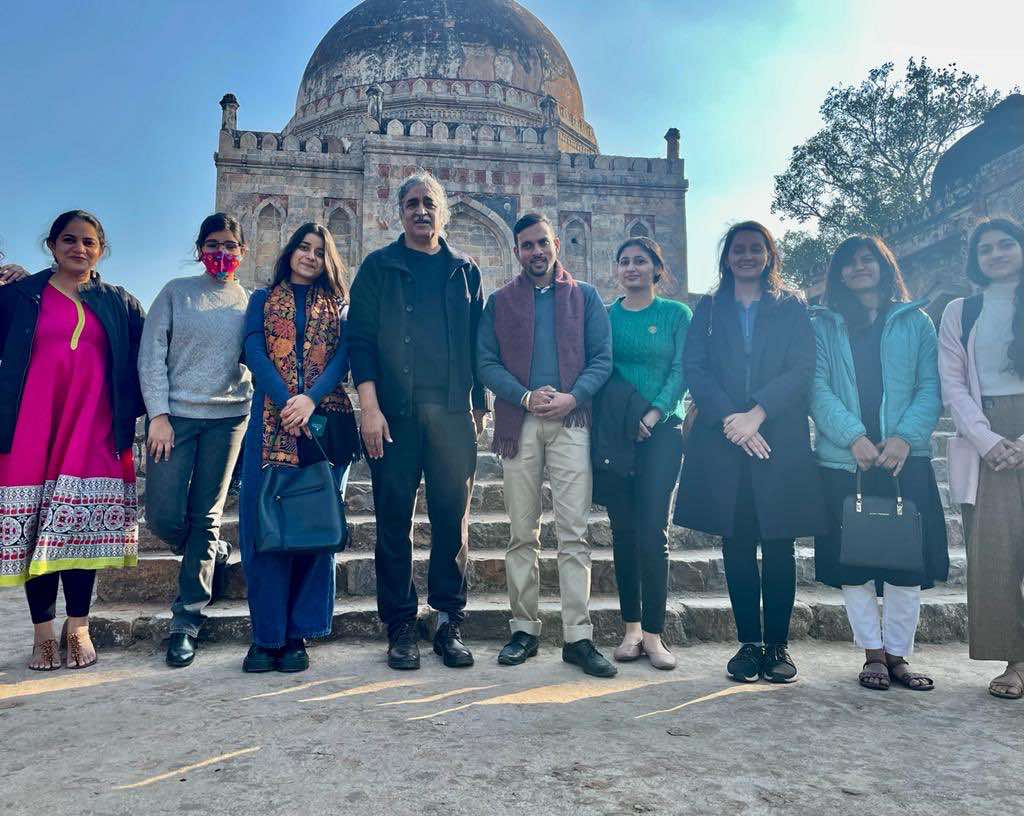
Beyond literature, Kumar has worked with federal and state governments on improving government policies and public programs in India. “My work speaks to different layers of the world,” said Kumar.
India, like Kumar’s work, is layered, comprising 29 states with diverse identities and languages. That environment has made it easy for him to explore a wide range of countries, whether it’s Germany, Italy, Korea, the UK, South Africa or the United States.
There certainly wasn’t a culture shock when he first set foot on U.S. soil in 1997 to pursue his PhD in political science. The University of Oklahoma welcomed him with open arms. It also introduced him to a sport deeply rooted in campus culture: football.
Kumar has become a full-fledged Sooner, although he avoids wearing his Oklahoma jersey around his wife, who attended the University of Texas at Austin. The dynamic adds fuel to the Red-River Rivalry, named in reference to the river that borders the two states.
Beyond a friendly household divide, the cultural phenomenon of American football has become a part of his social identity. “Wherever I go, I become a citizen of that nation,” said Kumar. “The idea here is to become grounded in your own culture. Be a great American and at the same time engage with the world.”
The mindset also shines through one of his proudest works, Aunty Maria. The piece portrays the American experience through Texas and Spanish culture, highlighting how different identities can intersect across borders.
“Everyone in the village loved Pinto beans and red paprika.
But Granny Maria grew up on
Pancakes, apple pies, and crunchy crackers.
After a shot of white rum punch
Granny sang,
“Picotante…paralysante…picotante…paralysante…”
Kumar’s writing style drew the attention of his PhD supervisor, Dr. Robert Cox, who described him as a “renaissance man.” “You don’t write standard social science language,” Cox said. “You speak like a poet—you write as if you come from multiple worlds.”
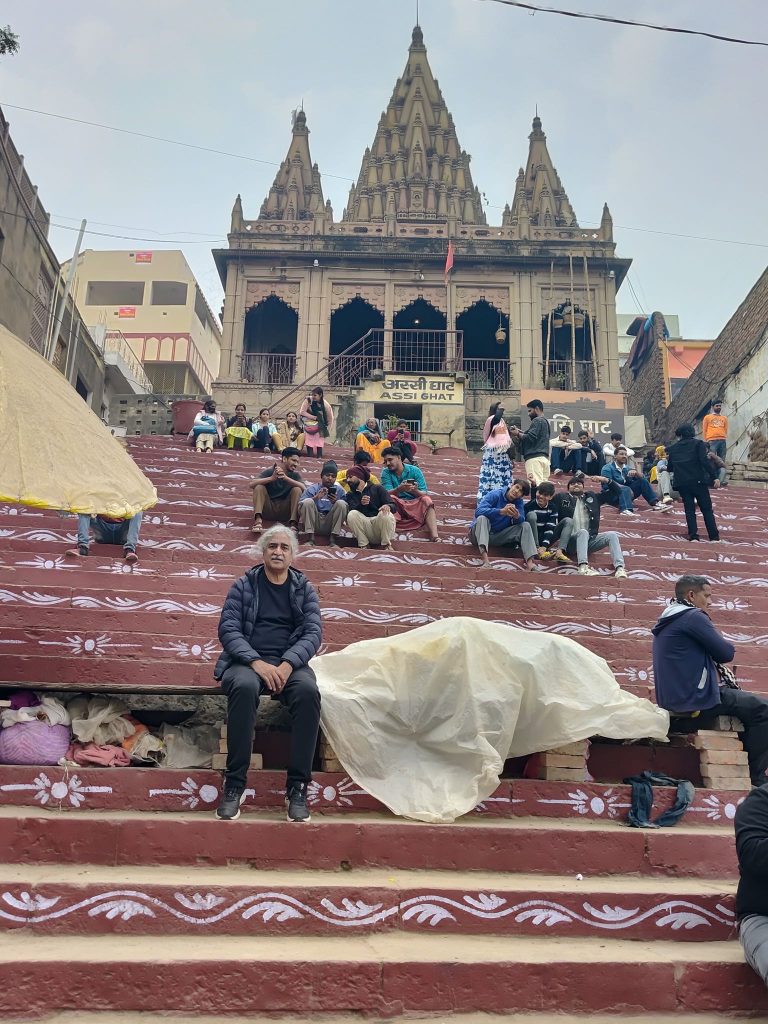
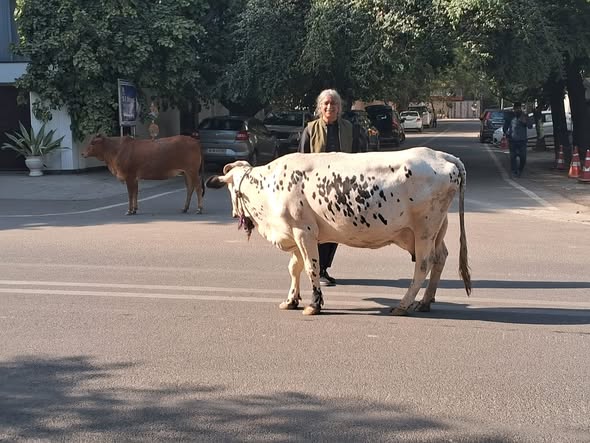
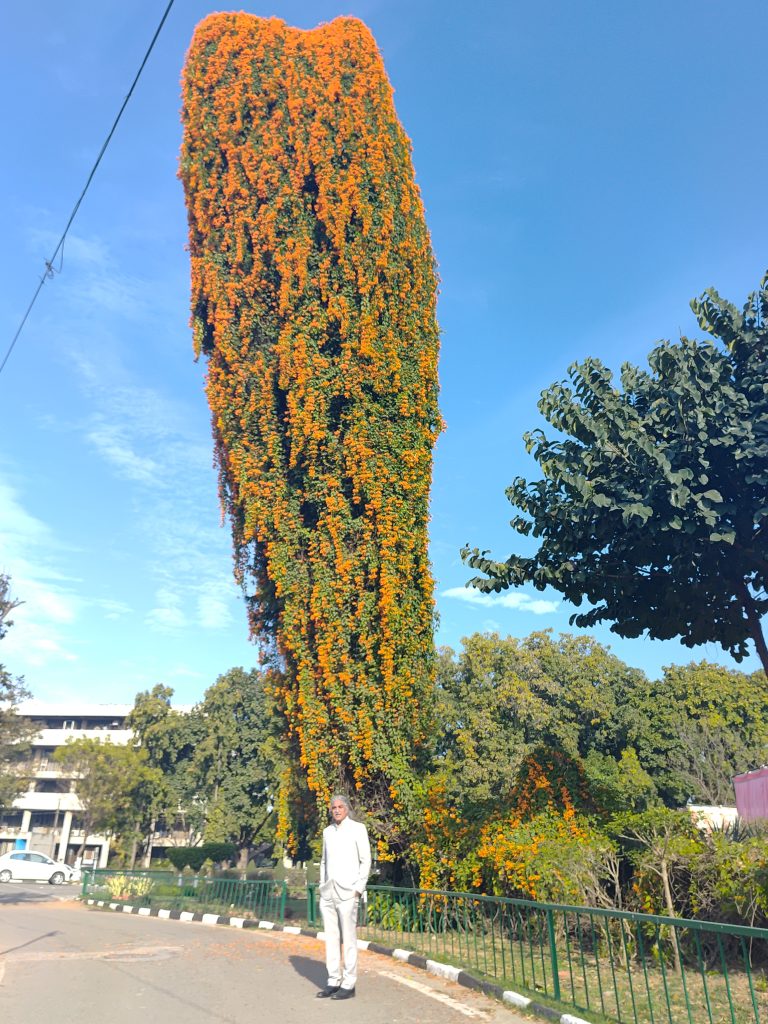
Years later, Kumar encountered Dr. Chris Plouff, UIndy provost and executive vice president, during an international engagement trip in India. In a striking echo of that earlier moment, Plouff described him as a “renaissance man.” Kumar has embraced the description himself: “I’m a renaissance person, perhaps lost in this world.”
UIndy’s global mindset piqued Kumar’s interest, who now serves as a visiting professor. The University recently brought him to Indianapolis on a J1 visa, an opportunity Kumar considers a “remarkable achievement” in itself.
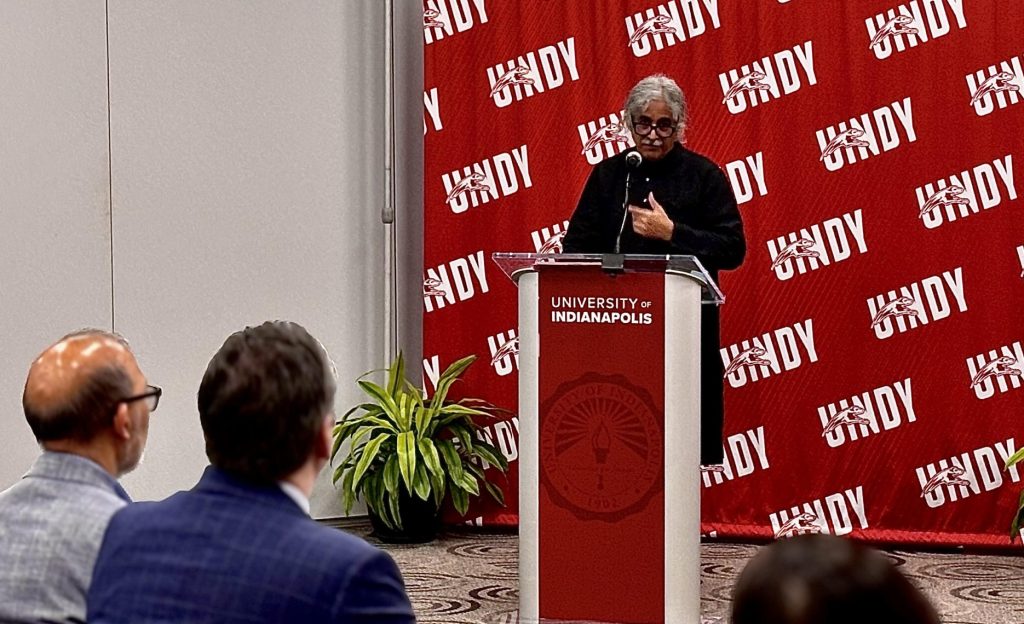
During his three-month assignment, Kumar has mentored students and conducted various workshops. He also delivered this year’s Sutphin Lecture, where he outlined India’s emergence as a major global power and described how its trajectory and destiny closely resemble that of the United States.
More notably, as UIndy strengthens its international engagement and studying abroad becomes more prominent, Kumar is working closely with faculty to revise and enhance the curriculum to better align with international practices.
While exploring the UIndy campus, he described the community as peace-loving and respectful. He sees UIndy as a “serene and ideal” place.
“It gives you a sense of academia, it gives you a sense of openness,” said Kumar. “Small enough but a large world itself.” He referenced “Small is Beautiful” by E.F Schumacher, who argued that smaller, more personable systems are often more efficient and meaningful than large, impersonal ones. “UIndy is poetry in itself,” added Kumar, who often sees things through a poetic lens.
Like his poetry, his life is not bound to one place. He may be rooted in Bihar, but he finds meaning in different places, from the roar of Oklahoma Memorial Stadium to the calm of UIndy’s campus.